
Solar Carving
4th Year BArch, Professor Enrique Jerez Abajo, Fall 2024, Spain
Located in the El Salvador neighborhood of Madrid, Spain, this collective housing project uses urban sustainability strategies to create an urban core with various housing typologies and communal spaces for the users. This project analyszes the various aspects of a neighborhood, from city planning to individual units. In order to minimize the shade pollution on the surrounding buildings, the neighborhood adapts to the site and creates a stepping form to allow sufficient sunlight to all units and communal spaces.
This project was done during my study abroad semester in Madrid
Softwares: Rhino, Lumion, Illustrator, Photoshop


Exterior Render
Initial Research
How can I begin to organize the density of this neighborhood? In this analysis, I compare various neighborhood typologies in Madrid.
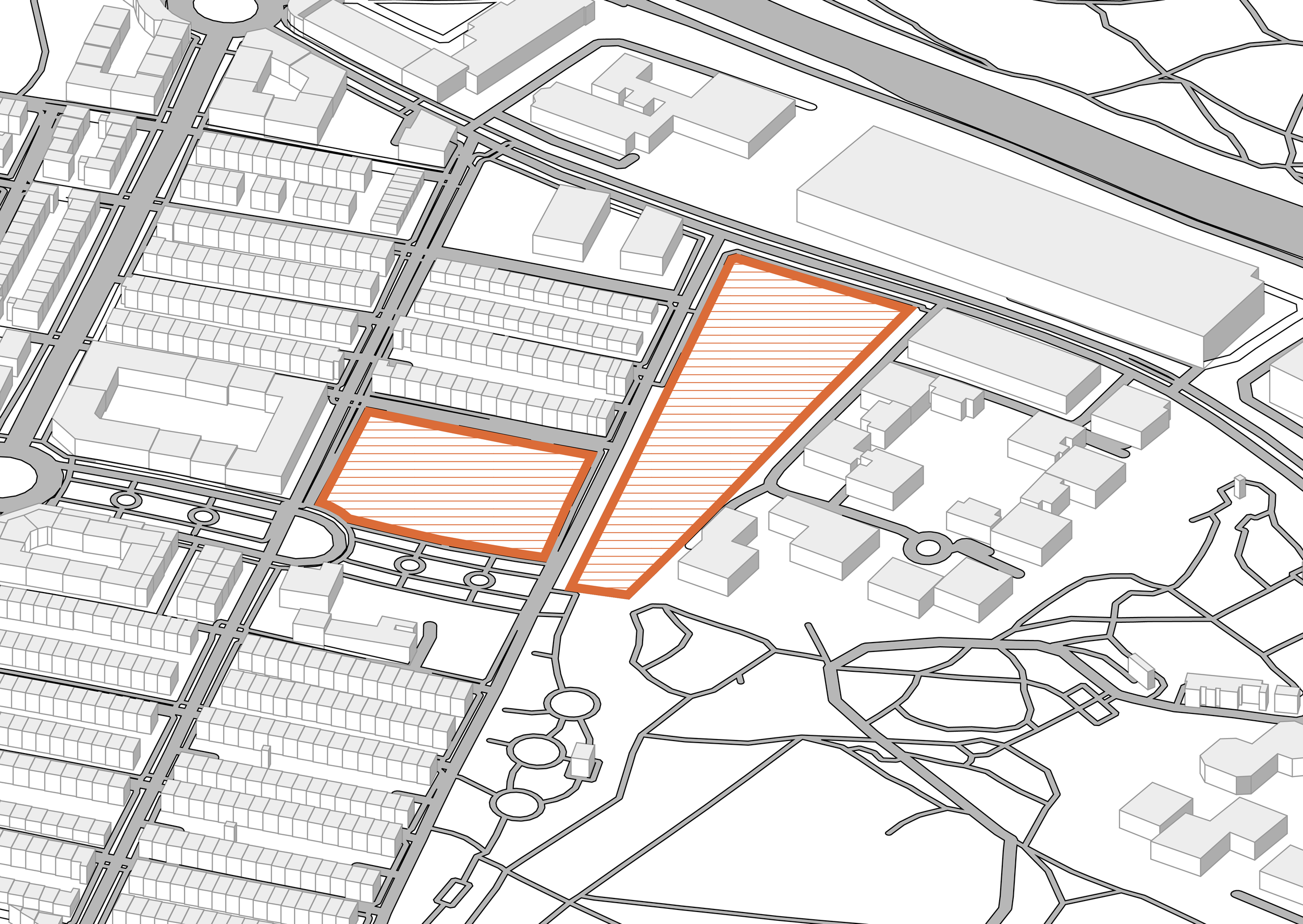



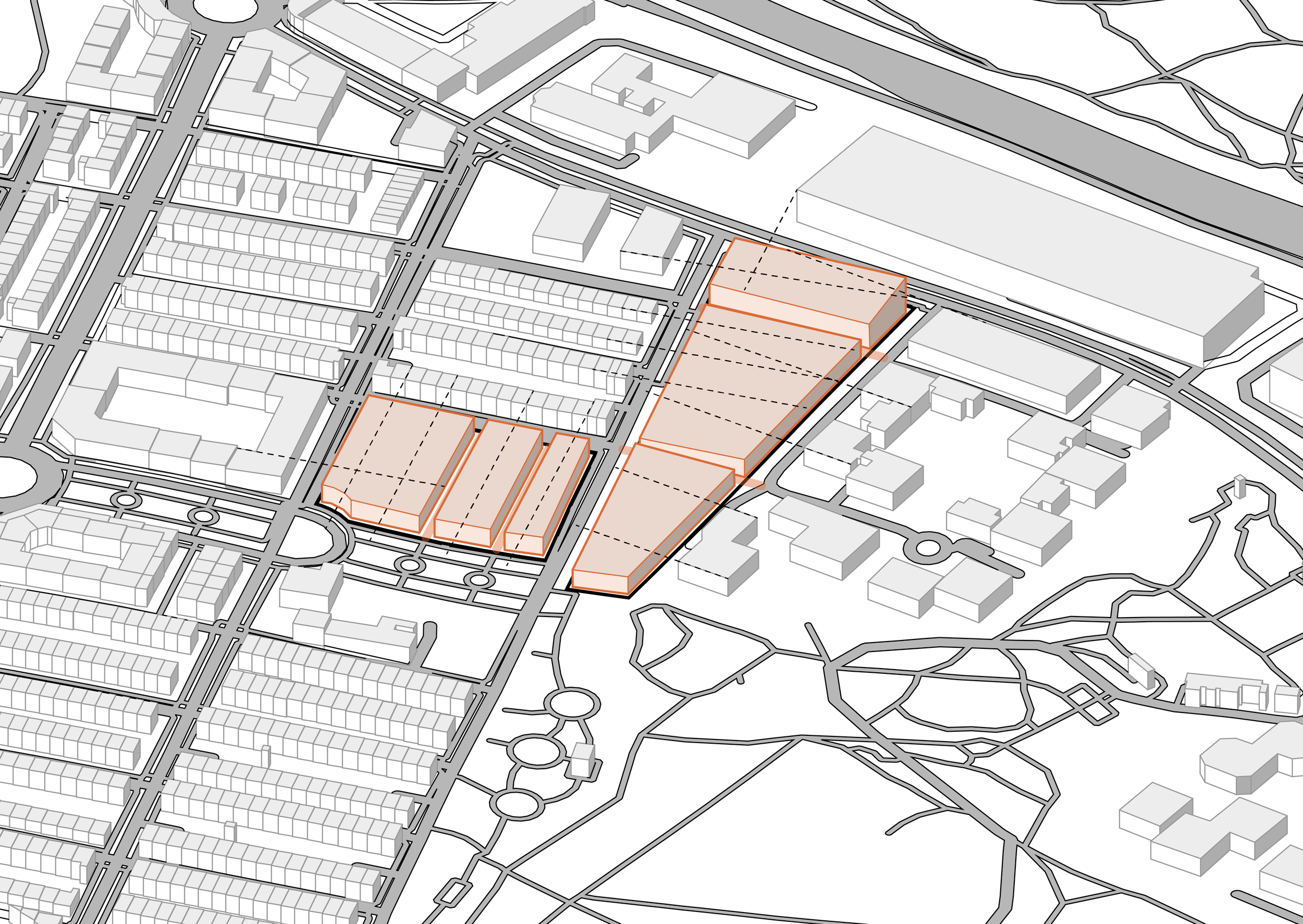
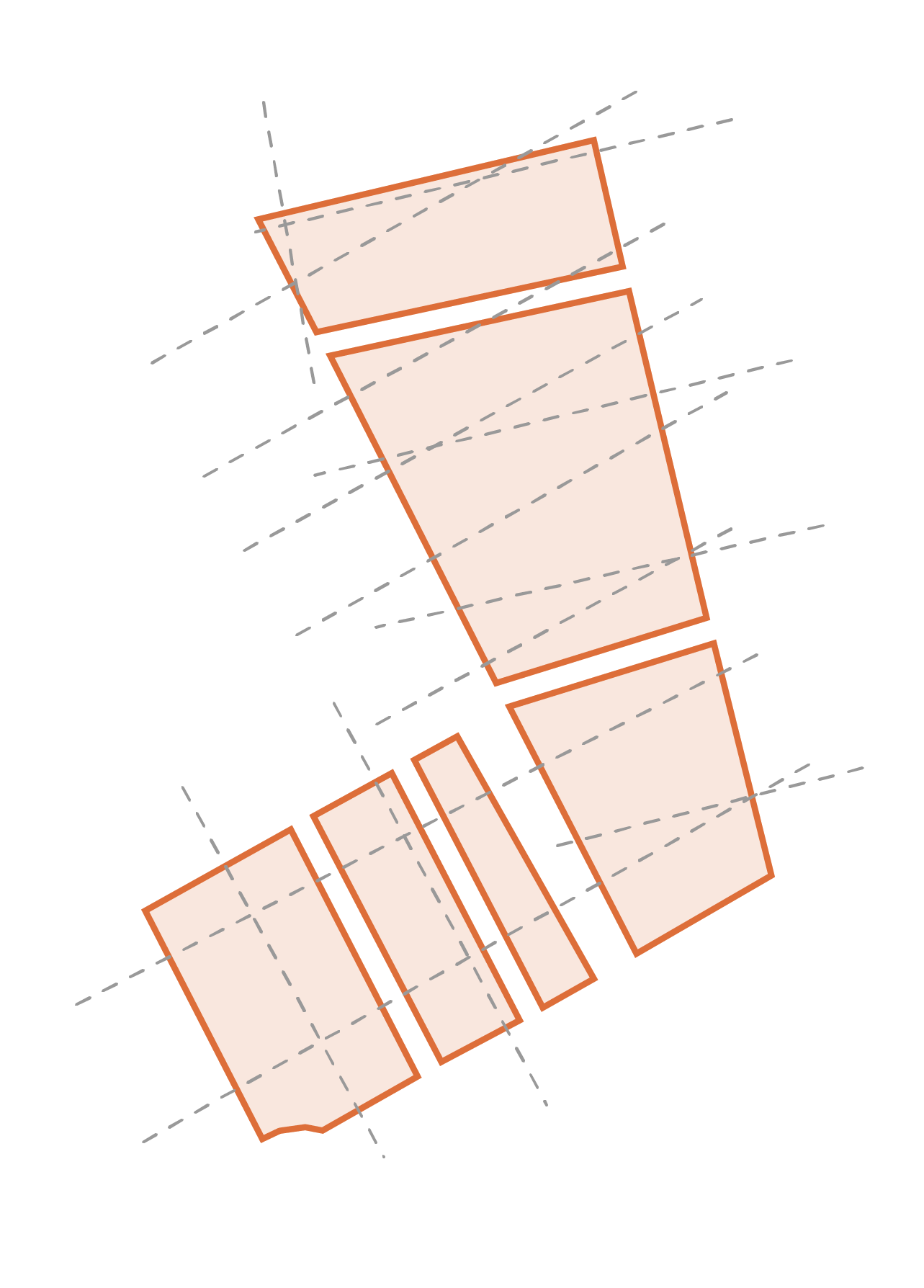
Apply Urban Fabrics of Various Neighborhoods in Madrid
01 Site

02 Road Continuity
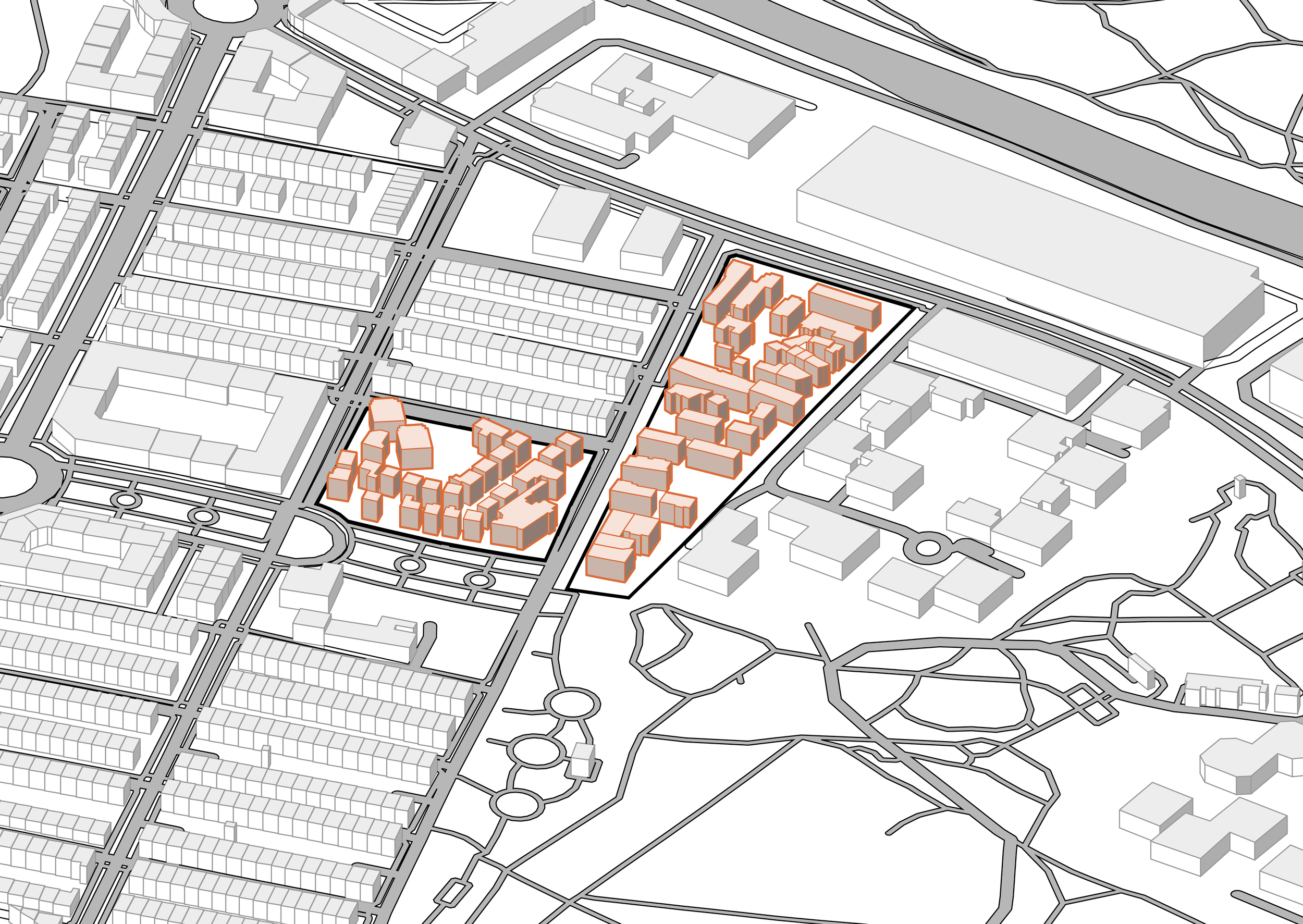

03 Extrude


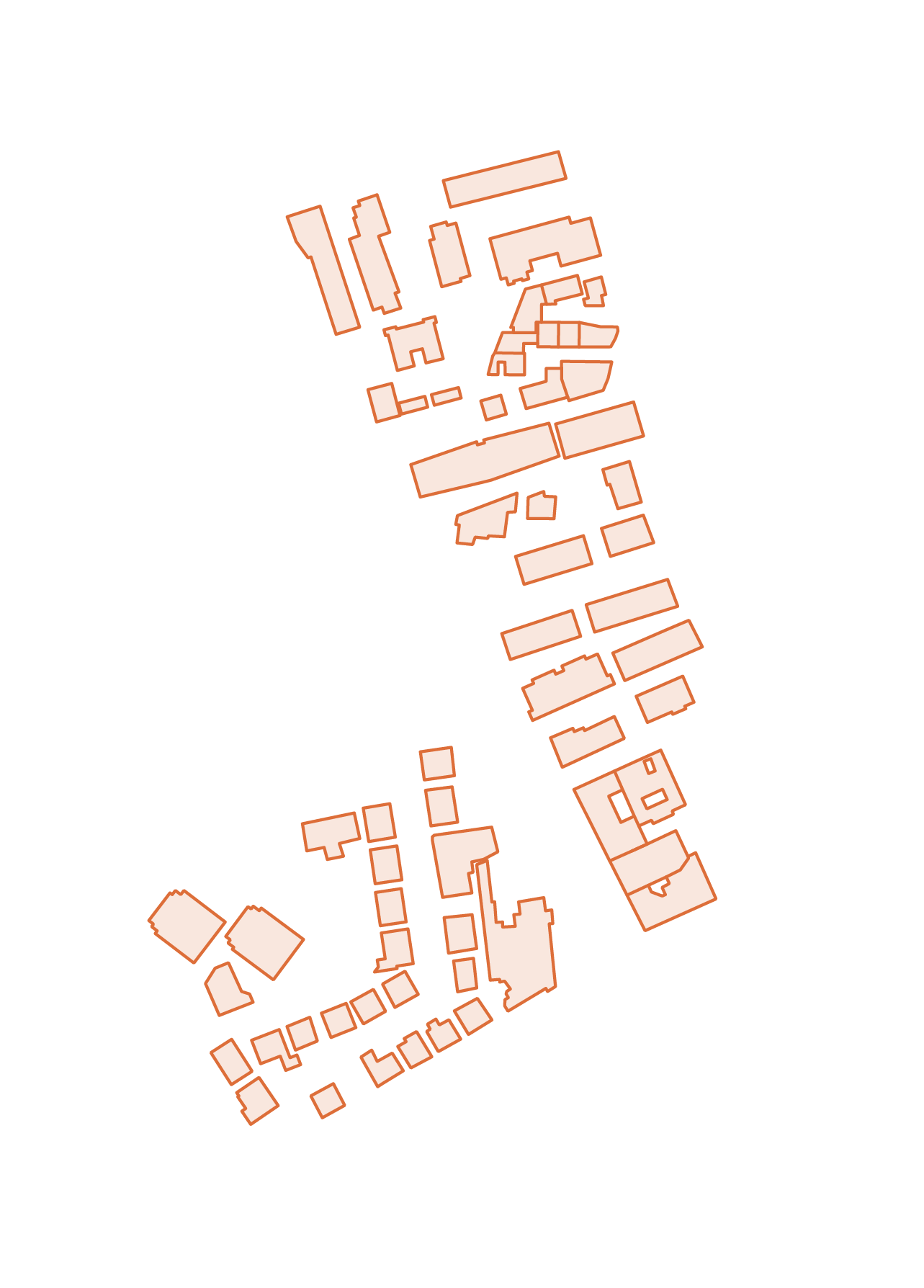
El Salvador

Chamartin

La Latina
Salamanca
Analyzing the current activities, users, and materiality of El Salvador.
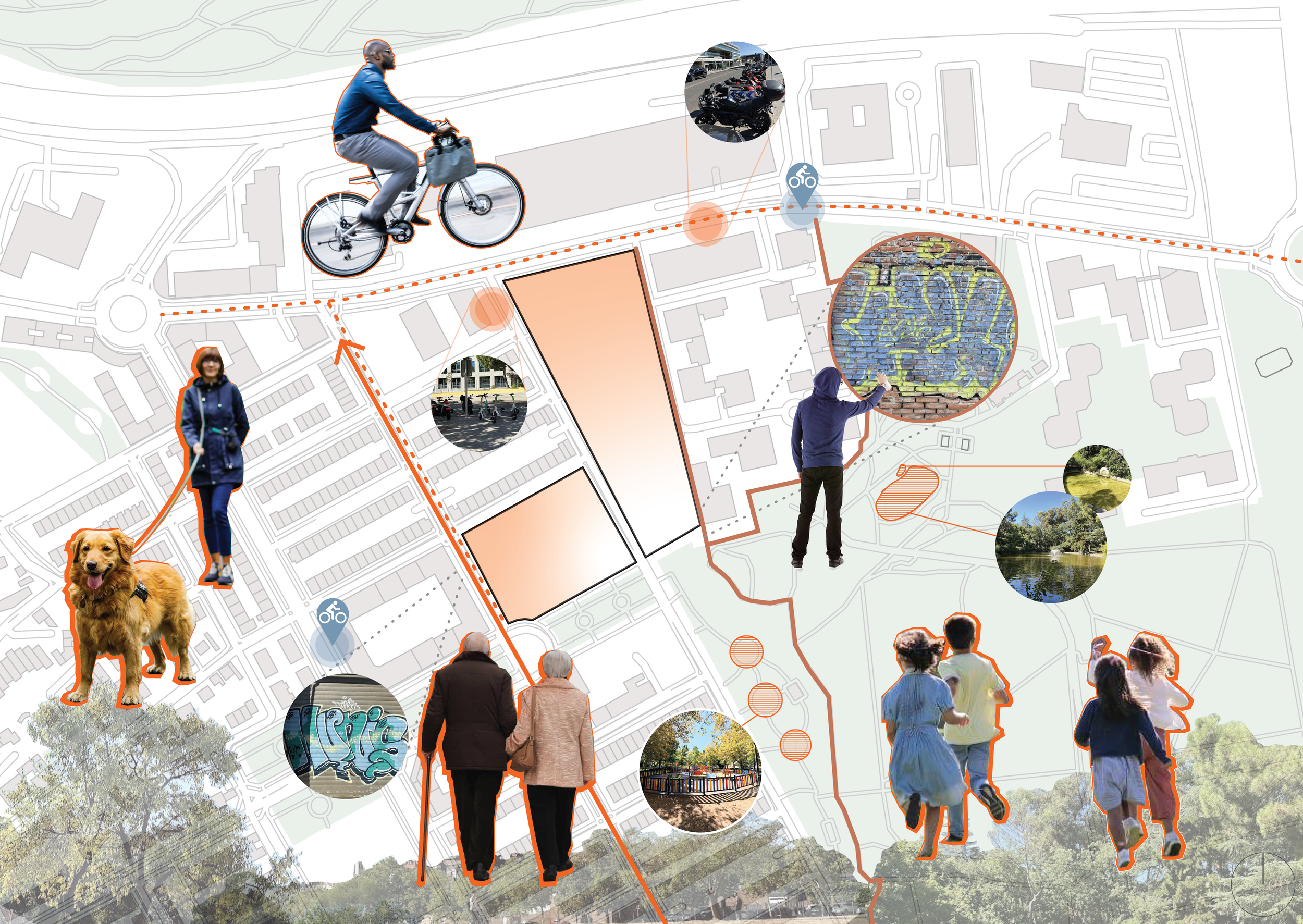


Materiality
Users
Activities
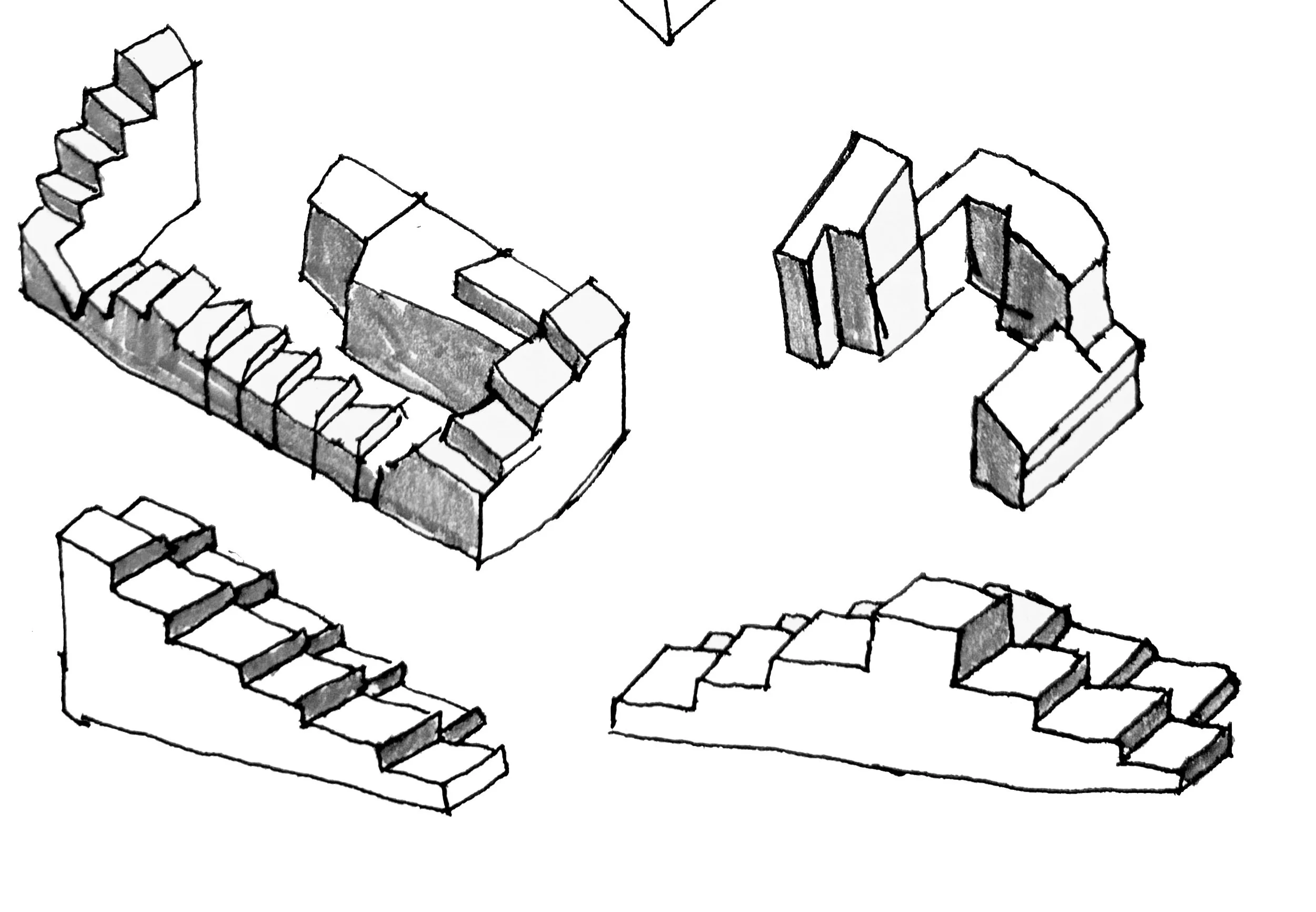
Based on my research, creating a stepped form that divides the topography and allows sufficient sunlight without causing shade pollution is the best solution.
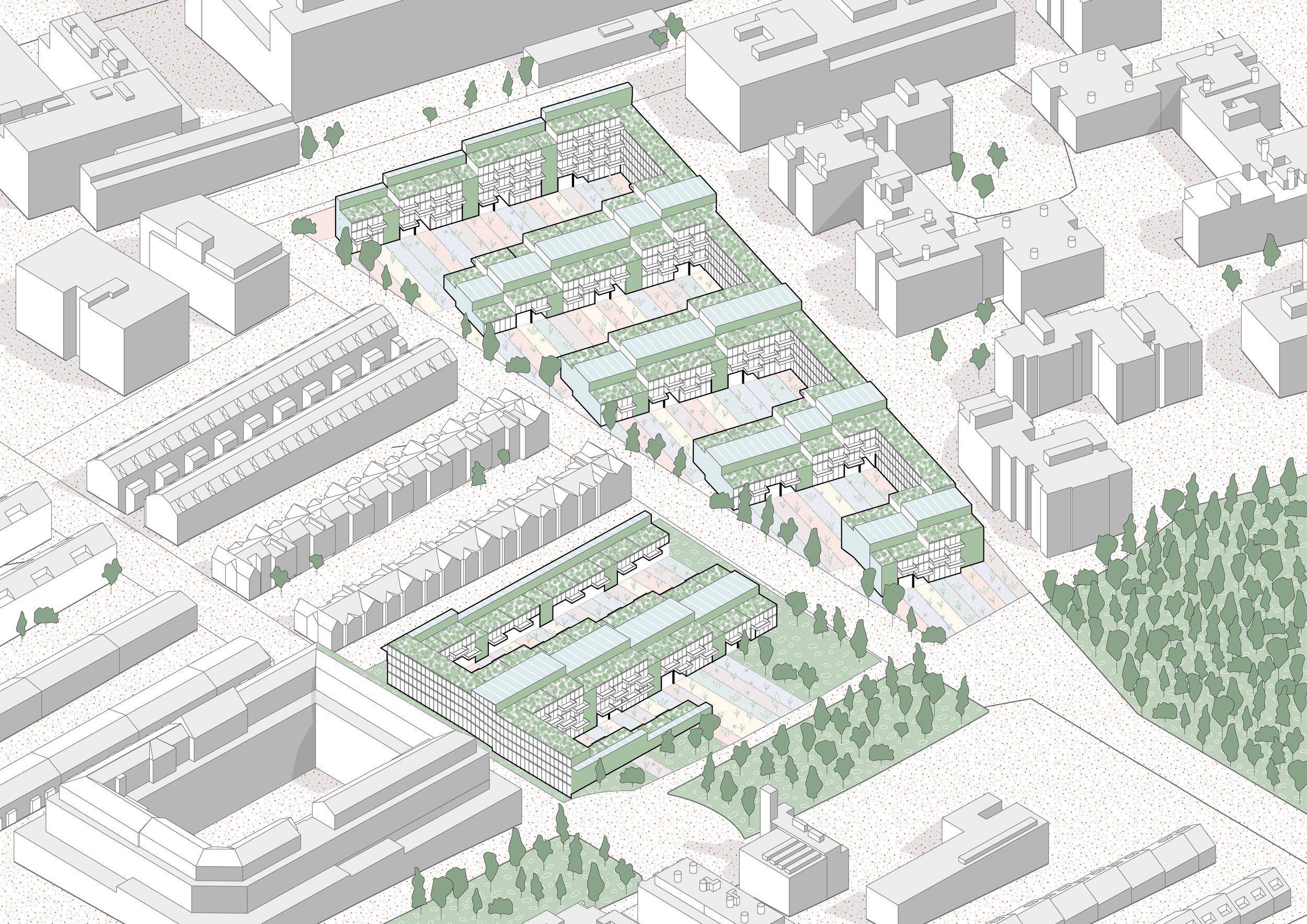
Site Axonometric
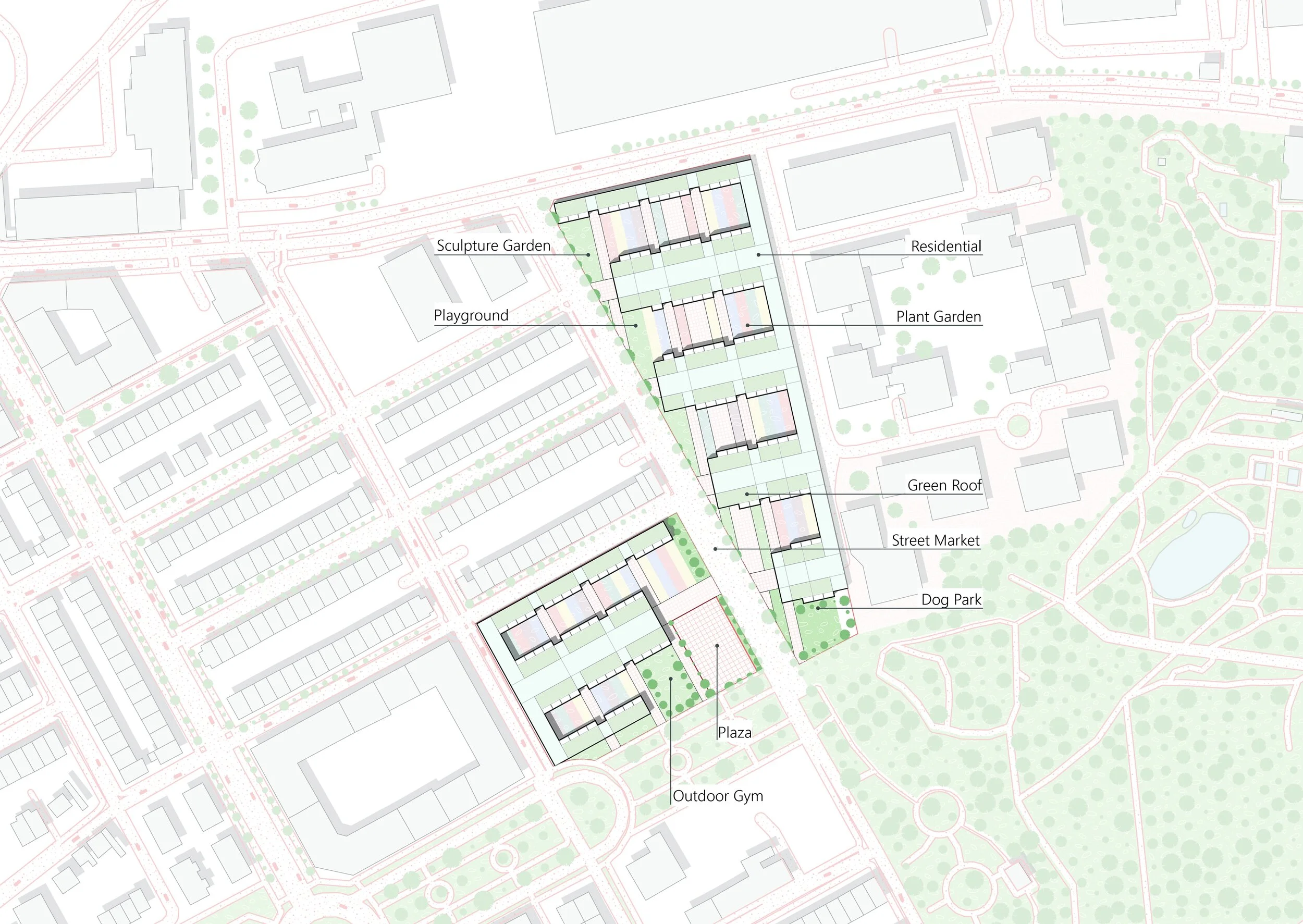
Master Plan 1:1500
Neighborhood Framework

Site Section 1:1500

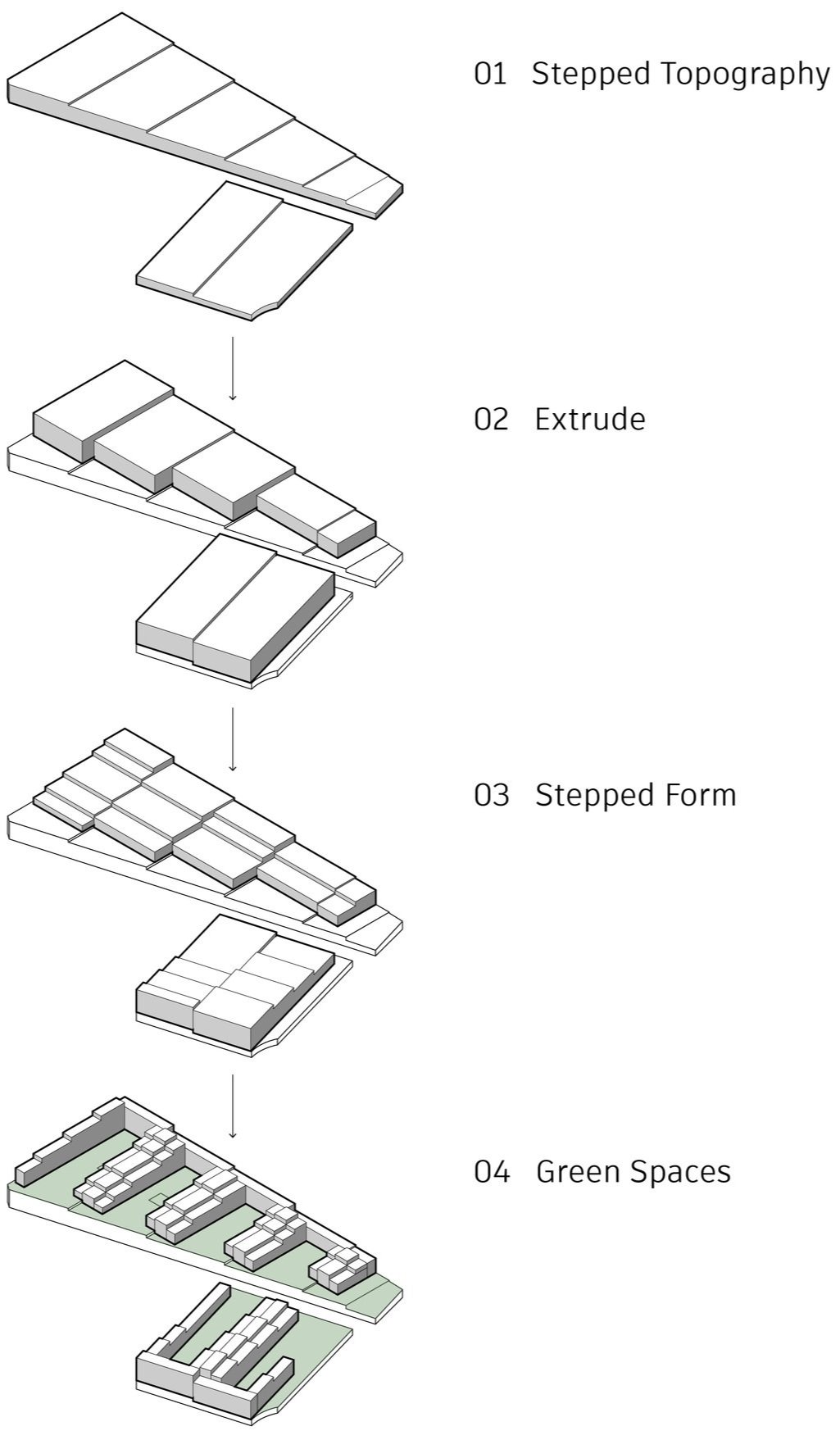
Public Spaces
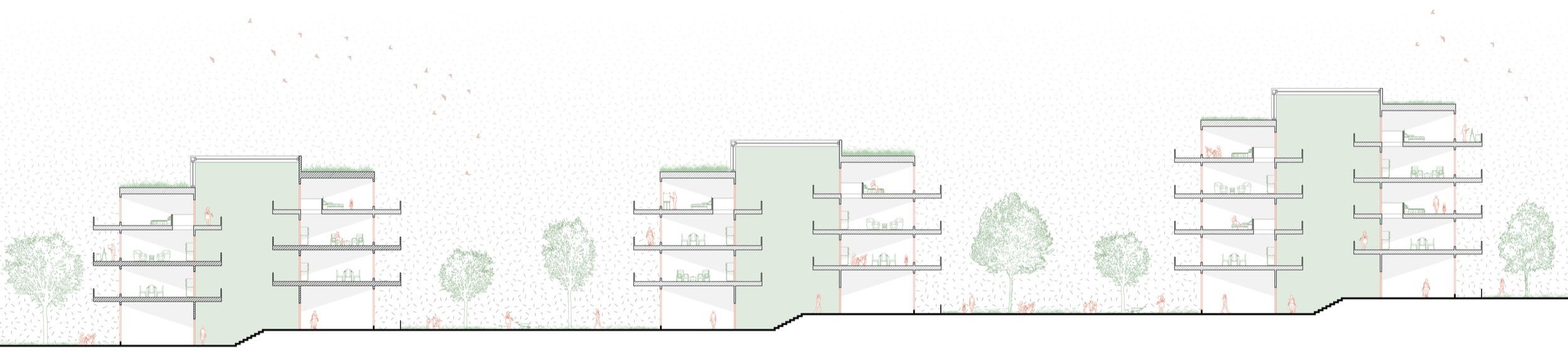
Building 1st Level Plan 1:300
Concept Diagram

Building Section 1:150
Common Domesticity

Building Elevation 1:250
Partial 3rd Level Plan 1:100
Common Domesticity
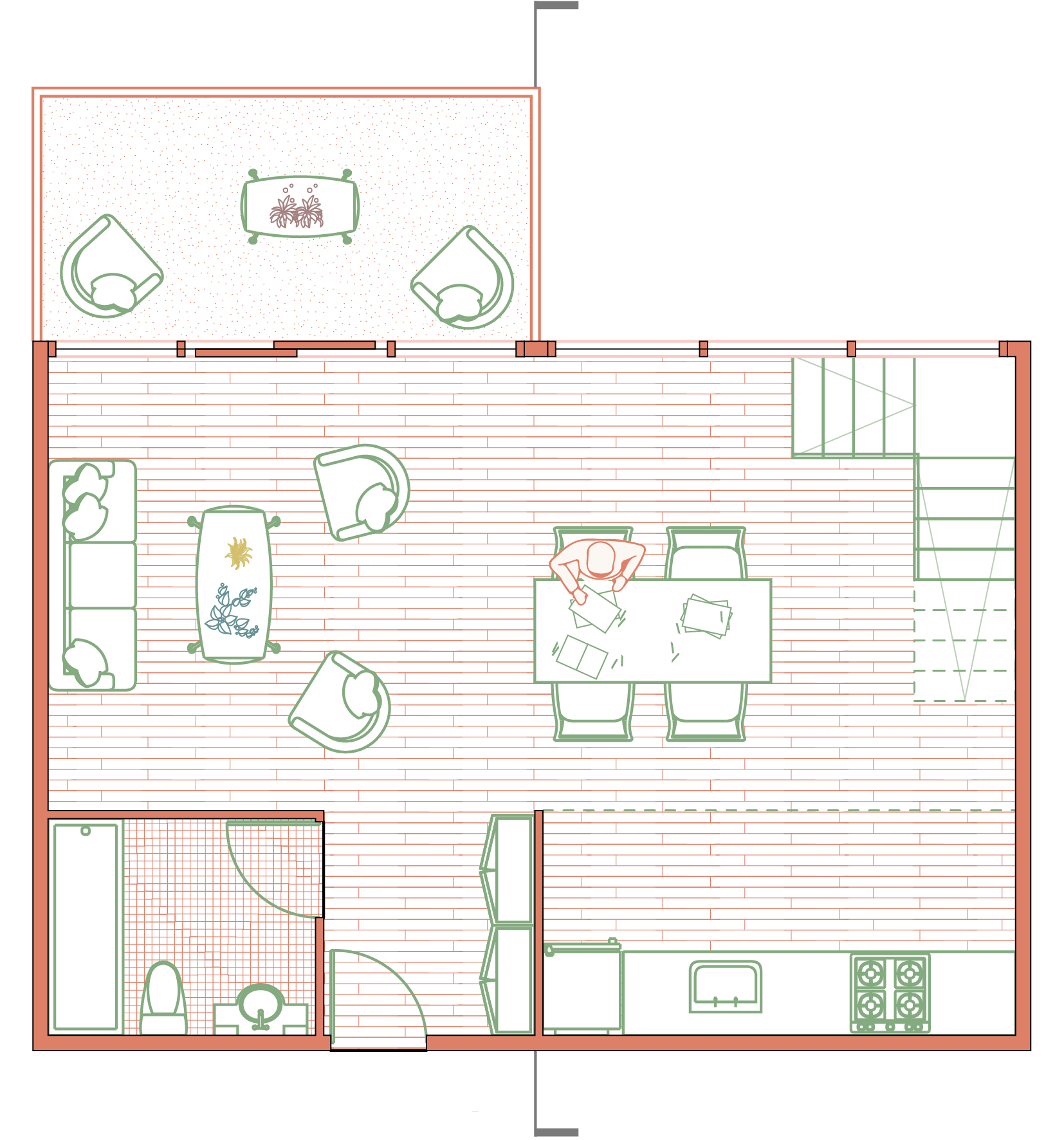
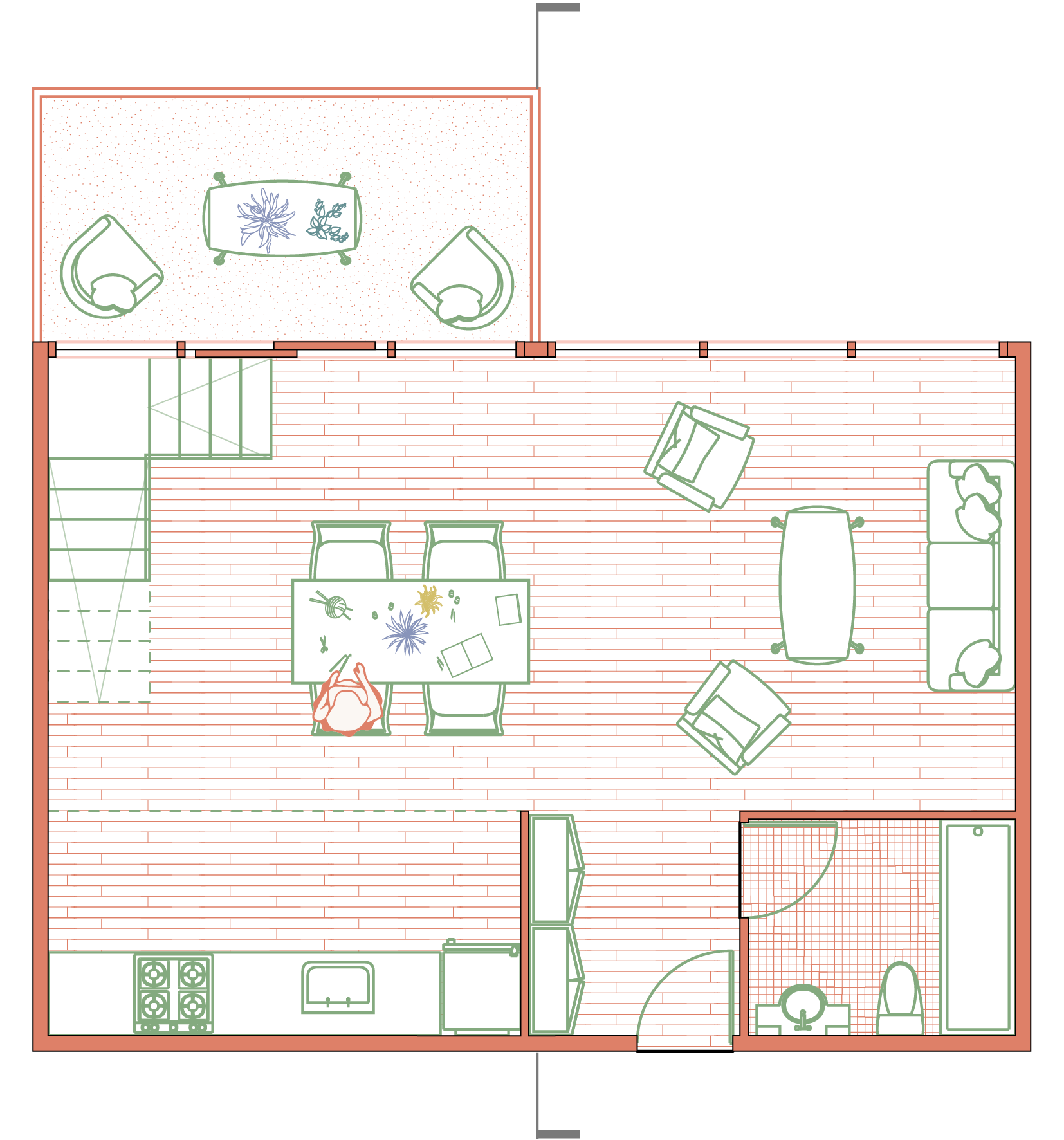
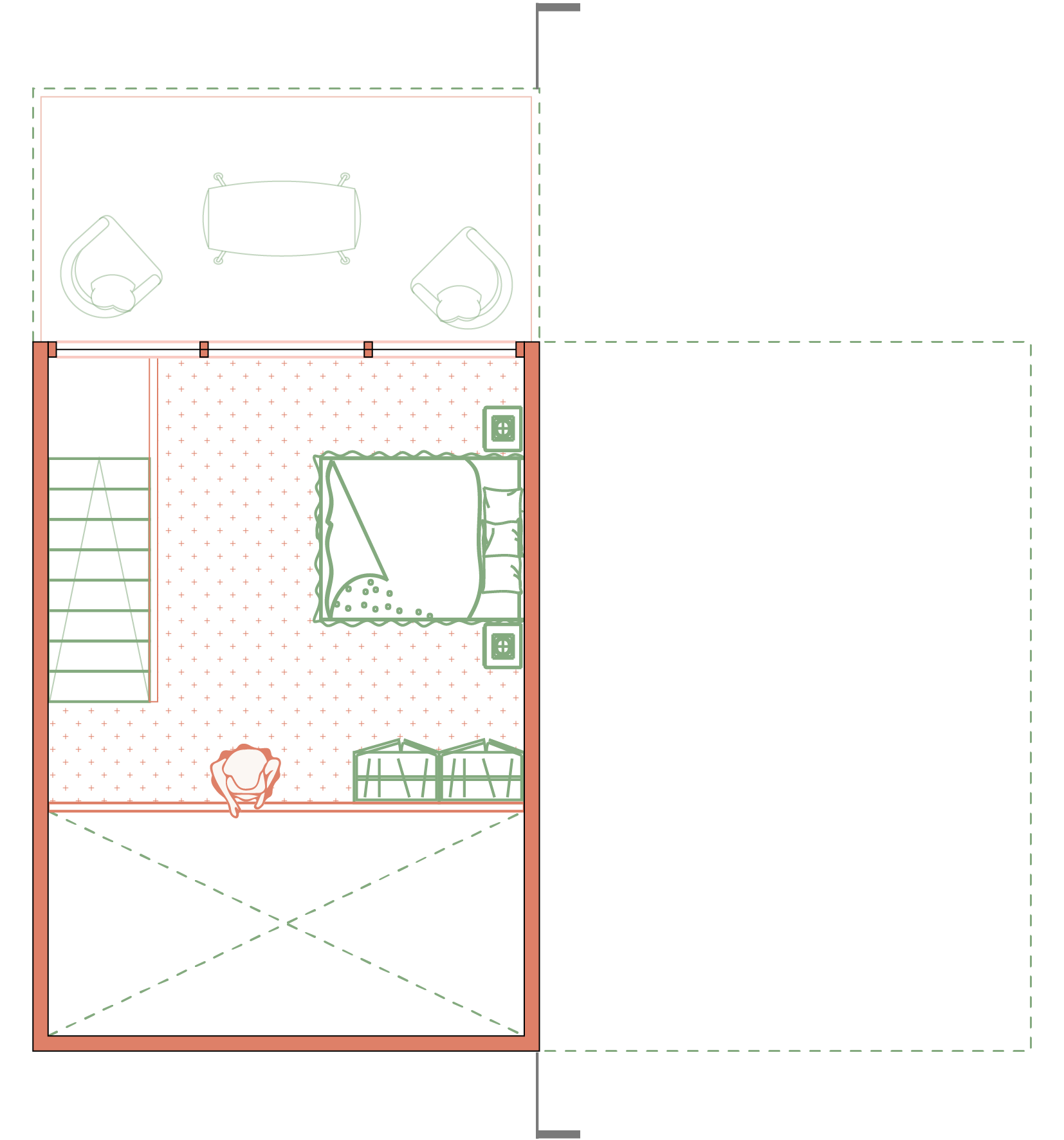
Units interlock within the building in order to create a facade with alternating balconies. This creates communal rooftop gardens for the residents to congregate. Additionally, each unit has its own balcony, creating a connection between the outdoors. In order to push the boundaries of the unit typologies, the two spines of units on either side of each apartment building are at differing heights. This is due to the stepped nature of the topography, and creates a unique experience for the residents.
Unit Typologies
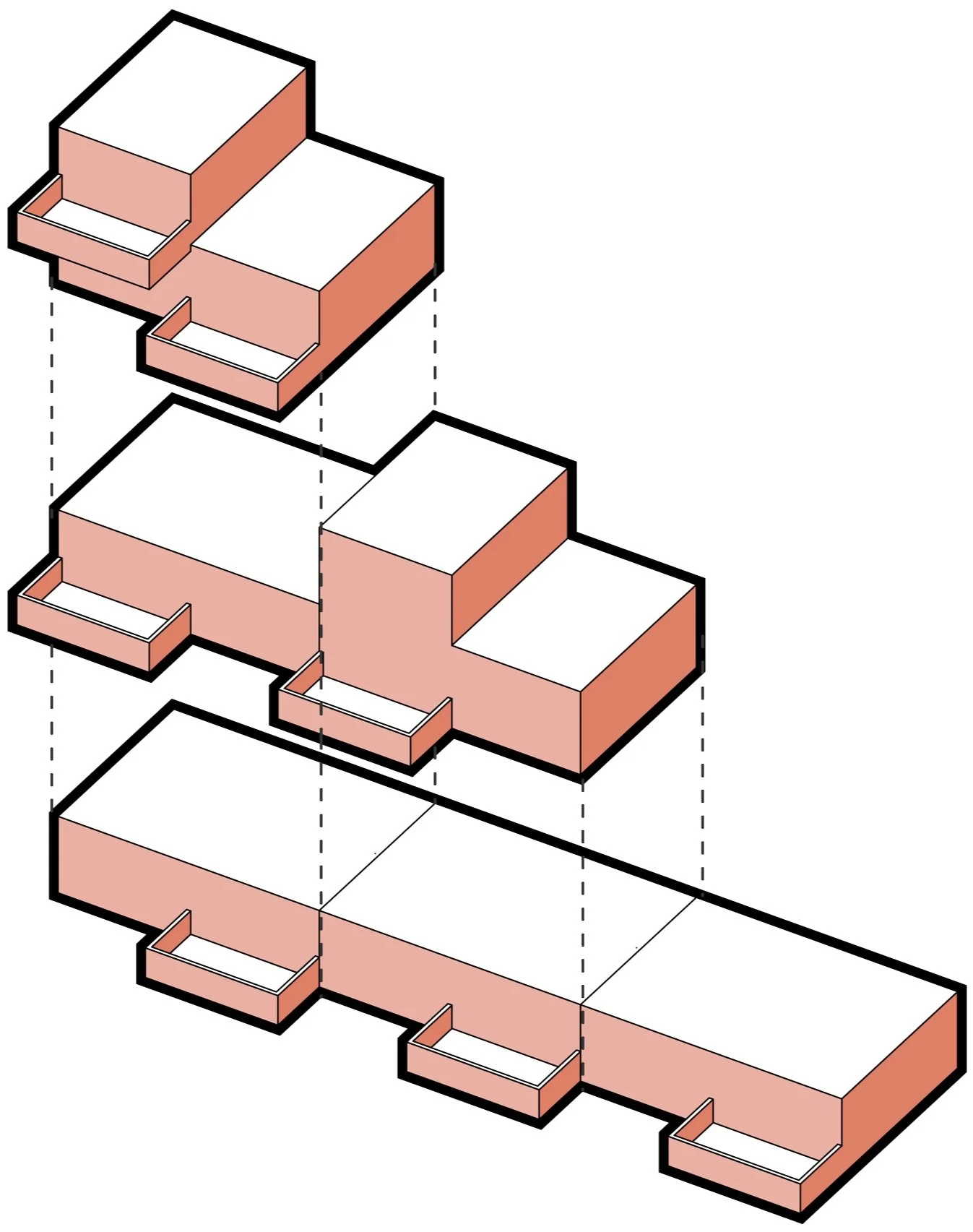

Unit Typology 1


Section
Axonometric
First Level Plan
Unit Typology 2

First Level Plan
Section


Unit Typology 3

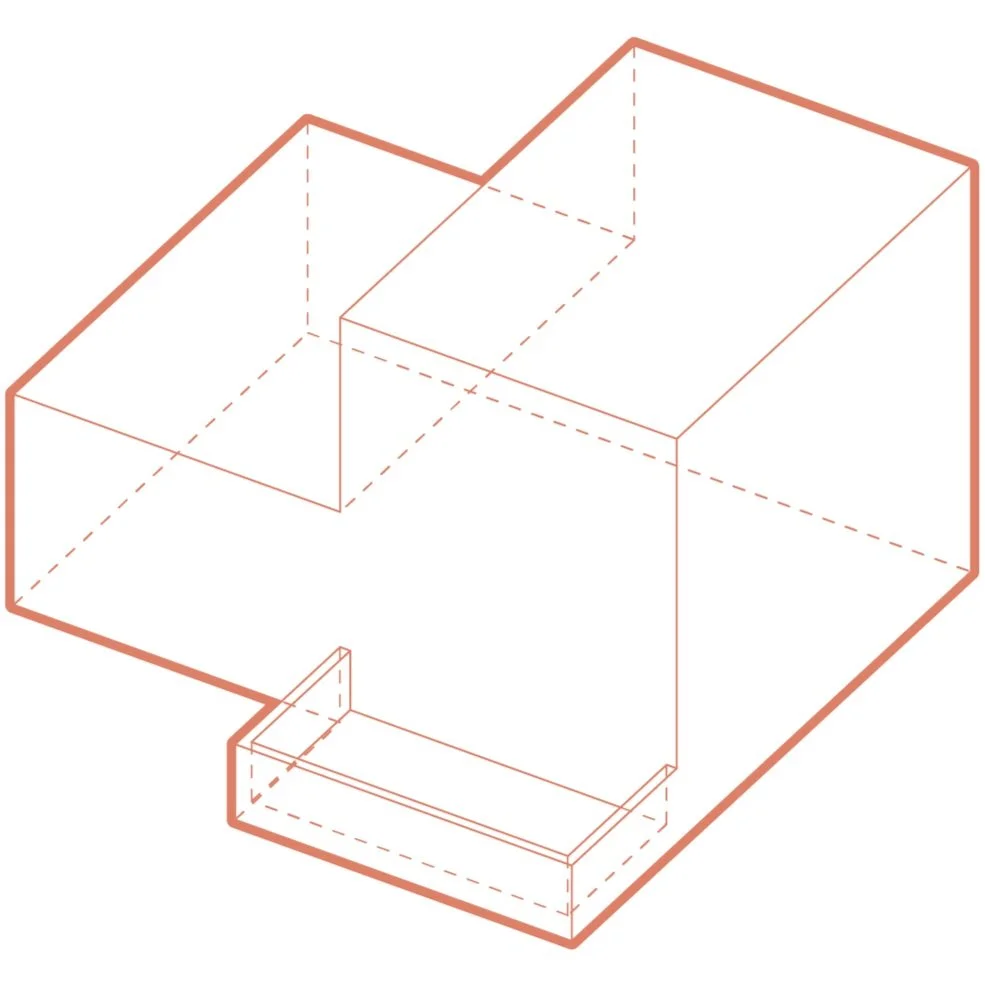
Axonometric
Second Level Plan
Section
First Level Plan
Axonometric
Second Level Plan

Interior Render
